 |
| CPRkey-G |
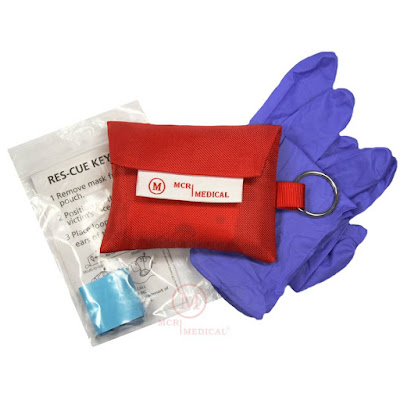
They're back --we are proud to announce the release our new CPR keychain with nitrile gloves!
A while ago MCR Medical Supply offered a CPR key chain pouch kit with gloves, but quality manufacturers stopped
making the kits a couple years ago and good, pre-made kits became hard to
find. The pouches in the market became a little shoddy and the masks
started showing up from unknown parties. We decided then that we would not offer a kit, rather than offer one of the available but lower quality kits. Even the big name kits on the market today leave much to be desired.
As a result, last year we decided to start assembling the kits ourselves and
have been working on the project since. Finally, we found a manufacturer
willing to make us a nice pouch, then convinced Ambu to provide the masks in
bulk, and ultimately decided to include a pair of Adenna nitrile gloves to both complete and compliment the contents.
The
compact, easy to use Ambu CPR Res-Cue Key mask in the kits feature a CPR
face shield with one-way valve that prevents contamination of the
outer surface of the mask and has elastic bands to secure the mask to
the patient. The Ambu mask also includes a handy instruction card that illustrates how to apply the mask and a reminder of the CPR basics.
The gloves are 4mil nitrile, which out perform the vinyl gloves found
in most other kits. The texture on the gloves provides a strong grip in
both dry and wet applications. The Adenna Precision Nitrile Gloves
ensure maximum dexterity as well as superior puncture and tear
resistance making these an overall excellent choice in barrier
protection.
The kits are assembled here in Ohio by our staff. We understand that some folks want to supply their own preferred
gloves, so the CPR keychain mask kit without gloves is also available.
Thank you for your patience while we worked to develop and manufacture this new product. We're especially excited to reintroduce our own kit,
and appreciate the opportunity to once again be your supplier of CPR
keychains with or without gloves!
 |
| FAK28-MCR |
Welcome Summer!
Memorial Day marks the unofficial start of Summer. In addition to fresh lemonade, taking a dip in the pool and having outdoor sunlight past 7pm, summertime can also means stings and scrapes -- sometimes worse.
The latest 2015 statistics show accidents as the 4th leading cause of death in America. That's why it's important to not only keep current with your CPR skills, but to revisit your basic First Aid training as well. While the basics remain the same, like applying direct pressure to stem bleeding and splinting an injury in the position you find it, it is still necessary to practice what you've learned and keep the supplies you need on hand to best utilize those ingrained skills.
Having a first aid kit is a step in the right direction. There is, however, no substitute for preparedness. We all need to examine our lives, busy as they are, and see what accidents or illnesses we're most likely to encounter. Our warehouse personnel need to be cautious when handling boxes as a mishandled cardboard box cuts just as easily as paper. And office workers can attest to how painful and inconvenient a bad paper cut can be. Little league coaches, do you know how to care for a child after they slide into second base and nick a fielder's cleat?
Scrapes and scars are part of life's adventure. Congratulations to everyone reading this as I bet at some point you've faced a situation where you required some first aid care, but no one was around. Your excellent administration of self-care is allowing you to read this article now - I applaud your efforts!
I must confess that one common practice often portrayed on TV and in movies makes my husband and I cringe every time we see it. Please, please do not worry about cleaning a wound when it is still bleeding profusely!!! If you're soaking dressings with fresh blood, there's no need to worry about washing germs away -- the bleeding is going to kill you faster than any perceived infection. So please, get that bleeding under control first, then worry about cleansing, dressing and bandaging, that way you'll stick around long enough to worry about infection!
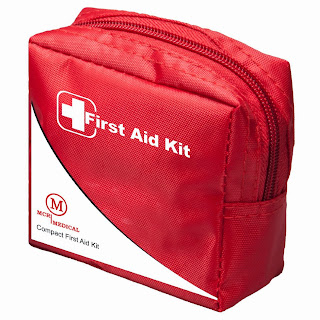
With that said, a personal first aid kit ensures you've got your essentials at hand. MCR Medical Supply's compact kit is small in stature but big on
utility. Measuring just 4” x 4”, it’s chock full of components to treat
minor injuries. Plus, it’s our smallest kit which still includes the popular ice pack. The compact first aid kit is made from durable
nylon, stores easily in a briefcase, purse, glove compartment, or desk
drawer, and has a loop for easy carrying on a duty belt or backpack accessory strap. The kit comes with:
- 1 Instant Cold Pack
- 2 BZK Antiseptic Towelettes (alcohol-free towelettes to cleanse without stinging)
- 1 Non-Adherent Bandage
- 1 First Aid Tape 1/2" x 2.5yds.
- 1 Rolled Gauze 2" x 4yds.
- 10 Adhesive Bandages 3/4" x 3"
- 5 Adhesive Bandages 3/8" x 1 1/2"
- 1 Fingertip Bandage
- 1 Knuckle Bandage
- 1 Pair Vinyl Gloves
- 1 Triple Antibiotic Pack 0.9gm
- 1 Hydrocortisone Pack 0.9gm
- 1 Hand Sanitizer Pack 0.9gm
- 1 First Aid Instruction Guide
Not everything you need in your kit? (Because you've assessed your daily living situation and found you really don't need the hydrocortisone, but could really use some extra gloves.) Personalize it! Make it fit your lifestyle. That's good advice for any first aid or 72-hour disaster prep kit you buy. It has been assembled with what someone thinks folks will need, but I always think of things I'd like more of and some items I don't need at all. Always open the pack to see what's in there and where it is. Don't waste precious minutes rummaging through an unfamiliar pack searching for a dressing. Keep sterile packaging in its original condition, but absolutely rearrange, add or remove things from the kit. A rescue medic friend says you should be able to close your eyes, reach into your kit and know what's where. We'll work on it, Mike!
In the meantime, I welcome you to peruse the MCR Medical Supply website, our Amazon or eBay store to see items you can use to personalize your own kit. Have a happy and safe Summer!
A question I receive quite often is:
How do I clean and disinfect my CPR training manikins during and especially after class?
Protecting our students from disease transmission is always important, now more than ever, with the rise in antibiotic resistant strains of bad bugs. The importance of using PPE (vinyl or nitrile gloves and CPR masks) during practice, as well an emphasis on effective hand washing must be a part of everyone's class, all the time. These simple steps are the first line of defense against various types of diseases, even life threatening respiratory illness and intestinal distress.
Some professional CPR training manikins can be cleaned and
disinfected according to CDC guidelines. Instructors should carefully
follow all manufacturers’ recommendations and verify the products used
to clean / disinfect are appropriate for their particular manikin and
will not damage it. While the risk of infection from CPR manikin
training is very low, it is still present. Help further minimize the risk by using proper
cleaning and disinfection procedures.
If students are sharing a manikin during class:
Between each student, encourage vigorous wiping of the manikin's face,
mouth and chest with a gauze pad wet with 70% isopropyl alcohol or a
comparable disinfecting product. Leave the surface wet for at least 30
seconds before wiping dry.
After class:
Scrub and wipe the entire manikin with either Clorox®-type disinfecting
wipes or a mixture of ¼ cup of non-scented liquid chlorine bleach per
gallon of water. Leave wiped surfaces wet with the solution for 10
minutes.
Internal surfaces can be cleaned using rubbing alcohol which
will both decontaminate surfaces and aid in drying, preventing fungal
growth.
Disinfection protocols change. Stay up-to-date by viewing current CDC guidelines.


